10 Best AI Aesthetic Laser Technology Trends for Global Buyers

Time:2026-09-18 Author:Isabella
0%

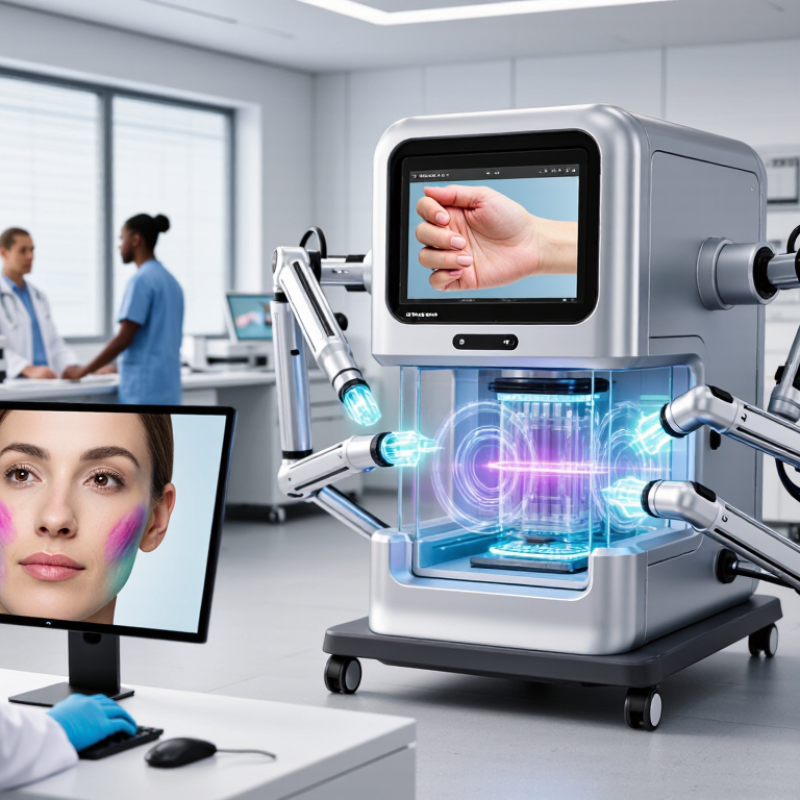
Aesthetic laser technology is moving beyond simple energy delivery. Global buyers now evaluate intelligent systems, clinical evidence, operator training, and long-term service support. The key question is: how is artificial intelligence influencing aesthetic laser technology? In practice, AI is helping platforms analyze skin images, recommend treatment settings, track treatment responses, and identify workflow inconsistencies. These tools may improve consistency, but they cannot replace qualified medical judgment.

The most promising systems combine multiple wavelengths, real-time skin monitoring, automated cooling, and adaptive pulse control. A patient’s uneven pigmentation, fine lines, or vascular concerns may require different energy levels across one treatment area. AI-assisted imaging can highlight these variations on a screen, giving clinicians more detailed information before treatment. Still, performance depends on image quality, training data, device calibration, and the practitioner’s experience. Technology alone is not a safety guarantee.

This guide explores ten major AI aesthetic laser trends shaping purchasing decisions worldwide. It considers clinical usability, evidence quality, cybersecurity, maintenance, consumable costs, and regulatory expectations. Buyers should review peer-reviewed studies, manufacturer documentation, local approvals, and post-sales training before investing. Marketing language can sound impressive. Verification matters more.

Some innovations remain early-stage. Their results may differ across skin types, clinics, and treatment protocols. That uncertainty deserves attention, not dismissal. A reliable purchasing strategy balances innovation with measurable outcomes, transparent limitations, and patient-centered care. For distributors, clinics, and medical technology partners, the strongest opportunity lies in selecting systems that are intelligent, practical, and responsibly supported.
10 Best AI Aesthetic Laser Technology Trends for Global Buyers

AI Aesthetic Laser Technology: Definition, Scope, and Core Applications

10 Best AI Aesthetic Laser Technology Trends for Global Buyers

AI Aesthetic Laser Technology: Definition, Scope, and Core Applications

AI aesthetic laser technology combines machine learning, imaging, and laser control software. It helps clinicians assess skin conditions and adjust treatment parameters with greater consistency. Cameras may analyze pigmentation, redness, texture, pore appearance, and estimated skin response before treatment. The system can then suggest energy levels, pulse duration, spot size, and cooling settings. Qualified professionals must approve every recommendation.

Its scope reaches beyond facial rejuvenation. Applications include hair reduction, vascular concerns, acne-related scarring, uneven pigmentation, and selected body treatments. In practical evaluations, real-time sensors can monitor skin temperature and treatment coverage. This may reduce missed areas and unnecessary exposure. Patient records can also support progress tracking through standardized photographs and treatment notes. Data quality matters.

The technology is not flawless. A model may misread heavily tanned skin, unusual lesions, or poor lighting conditions. Results can also vary across skin types, devices, operator skills, and maintenance schedules. Buyers should examine validation methods, cybersecurity controls, training requirements, and local regulatory compliance. Clear warnings are essential when software confidence is low. Human judgment remains central. A careful pilot may reveal workflow problems before large-scale purchasing.

The chart compares representative wavelengths used across ten widely adopted aesthetic laser technology categories. Wavelength selection is linked to the target chromophore, treatment depth, and clinical application. These values are typical reference wavelengths rather than market-share or company-specific data.

How AI Enhances Laser Diagnosis, Treatment Planning, and Precision

10 Best AI Aesthetic Laser Technology Trends for Global Buyers

AI is reshaping laser diagnosis, treatment planning, and energy control in aesthetic medicine. Grand View Research estimated the global medical aesthetics market at about USD 18.6 billion in 2023, with strong growth expected through 2030. This demand encourages clinics to seek measurable precision, not attractive software alone.

Modern systems can analyze pigmentation, vascular patterns, texture, and facial symmetry from standardized images. They may then suggest treatment zones, pulse settings, and staged sessions. However, skin tone, medication history, and healing response still require trained clinical judgment. The FDA’s public database lists more than 1,000 AI-enabled medical devices, although radiology remains the largest category. That distinction matters. AI adoption does not automatically prove safer aesthetic outcomes.

The weak point is obvious: AI can be confident and wrong. Poor lighting may distort diagnosis. Incomplete patient records can produce unsuitable plans. Clinics should request validation data across Fitzpatrick skin types, transparent decision logs, and regular device calibration. Human review must remain mandatory before treatment. Precision needs accountability.

Tips: Use identical lighting and camera distance for every assessment. Compare AI suggestions with clinical examination. Record energy levels, cooling time, and tissue response after each session. Ask suppliers for peer-reviewed evidence, not only performance claims. A small error can become visible on skin.

Ten Leading AI Aesthetic Laser Trends Shaping Global Markets

Ten Leading AI Aesthetic Laser Trends Shaping Global Markets

AI aesthetic laser technology is moving from fixed settings toward responsive treatment systems. Ten trends are shaping global markets. These include adaptive energy control, AI skin analysis, personalized pulse delivery, real-time cooling feedback, and multi-wavelength platforms. They can help clinicians adjust treatments for texture, pigmentation, and vascular concerns. However, automation does not replace clinical judgment.

Other major trends include automated treatment mapping, predictive device maintenance, cloud-based performance analytics, inclusive skin-tone safety protocols, and virtual staff training. Better systems now record treatment parameters, cooling levels, and patient responses. This supports more consistent workflows and clearer follow-up decisions. Yet, evidence quality differs between systems. Some dashboards look impressive but offer limited clinical value. Buyers should remain skeptical.

Tips: Request independent testing data. Review safety controls for diverse skin tones. Check whether staff can override automated settings. Ask about data protection and service response times. Compare measurable outcomes, not attractive interfaces. A practical trial with trained users can reveal hidden workflow problems. The best investment may not be the most advanced device. It may be the one teams can operate safely, explain clearly, and maintain reliably.

Safety, Compliance, and Clinical Validation for International Buyers

AI-assisted aesthetic laser systems are moving beyond fixed treatment presets. Newer platforms may analyze skin tone, lesion patterns, and treatment response in real time. However, automated recommendations should support, not replace, licensed clinical judgment. A bright interface is not evidence of safety.

International buyers should request documented clinical validation before reviewing marketing claims. Look for prospective studies, clear endpoints, reported adverse events, and patient data across different skin types. Studies should explain treatment settings, follow-up periods, and operator qualifications. Small internal tests can be useful, but they rarely prove broad clinical performance.

Compliance also requires careful review. Regulatory clearance differs by country and may depend on the intended use, software version, and treatment indication. Buyers should verify quality management records, electrical safety testing, cybersecurity controls, and data protection procedures. Ask whether the system creates traceable treatment logs. This matters when a clinician must investigate an unexpected reaction. Staff training, maintenance schedules, calibration records, and informed consent materials should be available in the local language. Safety comes first.

AI can reduce inconsistency, but it can also repeat hidden bias in its training data. That weakness deserves attention. No validation package is perfect, and post-market monitoring remains essential. A responsible supplier should welcome independent evaluation and provide updates when clinical evidence changes.

How to Evaluate and Select AI Aesthetic Laser Equipment Globally

AI aesthetic laser technology is moving toward smarter treatment planning, skin analysis, adaptive cooling, and automated treatment records. However, global buyers should evaluate performance before impressive software features. Ask for measured results, not only demonstrations. Check wavelength options, pulse duration, fluence control, spot size, cooling response, and handpiece durability. These details affect comfort, treatment consistency, and suitability for different skin types.

Regulatory readiness matters. Confirm whether the equipment is legally permitted in the target market, and request complete technical files, safety testing, operator training, and maintenance procedures. Reliable suppliers should explain contraindications, emergency protocols, calibration schedules, and data protection practices. AI recommendations also need clinical review. An algorithm may identify patterns, but it cannot replace trained judgment or patient consultation. A practical evaluation should include test sessions, service response times, spare-part availability, and transparent warranty terms. A low purchase price can become expensive when support is weak.

Tips: Compare identical specifications across suppliers. Request raw test data. Check performance on varied skin tones. Review software updates and offline functions. Ask who handles repairs locally. Do not accept vague claims such as “fully intelligent” without evidence. I have found that buyers often focus on the screen interface and overlook cooling stability. That is an easy mistake. Also, no evaluation is perfect; real clinic feedback may reveal problems that laboratory documents miss.

10 Best AI Aesthetic Laser Technology Trends for Global Buyers — How to Evaluate and Select AI Aesthetic Laser Equipment Globally
Trend Technology and Typical Parameters Primary Aesthetic Applications AI-Enabled Function to Evaluate Global Buyer Value Evidence and Maturity Key Selection Criteria
1
AI-assisted diode laser hair removal
Common diode wavelengths include approximately 755 nm, 810 nm and 940 nm, depending on the device configuration.
Long-term hair reduction on the face and body; treatment planning for different skin tones and hair characteristics. Skin-tone and hair-density assessment, treatment-area mapping, automated energy recommendations, contact-temperature monitoring and session-record analysis. High throughput Personalized settings Reduced operator variation ★★★★☆ High
Diode laser hair reduction is an established aesthetic application; AI personalization is an emerging enhancement.
Verify wavelength selection, fluence and pulse-width ranges, cooling performance, spot size, skin-type safeguards, calibration records and clinical documentation.
2
Adaptive long-pulsed 1064 nm Nd:YAG systems
Long-pulsed 1064 nm energy is commonly selected for deeper penetration and comparatively safer use across darker skin types when properly operated.
Hair reduction, vascular lesions, selected benign pigmented lesions and some skin-rejuvenation protocols. Real-time pulse adjustment using skin temperature, treatment history, target response and epidermal safety limits. Broad skin-tone usability Deep penetration Safety monitoring ★★★★☆ High
The wavelength and major indications are well established; automated adaptation requires independent validation.
Assess pulse-duration range, cooling method, repetition rate, epidermal protection, operator override, contraindication controls and maintenance requirements.
3
AI-guided fractional non-ablative laser resurfacing
Common platforms use non-ablative fractional wavelengths such as approximately 1440 nm, 1540 nm or 1550 nm.
Uneven skin texture, fine lines, acne-scar appearance and mild-to-moderate photodamage. Image-based texture scoring, scar-area mapping, density and energy suggestions, treatment tracking and standardized before-and-after imaging. Consistent protocols Downtime management Outcome tracking ★★★★☆ High
Fractional resurfacing is clinically established; software-based assessment varies significantly by system.
Confirm fractional coverage range, energy and density controls, scanner uniformity, cooling, imaging standardization, informed-consent workflow and skin-type guidance.
4
AI-supported ablative fractional CO2 laser
CO2 lasers operate at approximately 10,600 nm and create controlled vaporization of targeted tissue.
Resurfacing, acne-scar appearance, wrinkles, selected benign lesions and texture irregularities. Facial-zone recognition, treatment-density recommendations, plume and temperature alerts, protocol templates and complication-risk prompts. Strong resurfacing capability Protocol standardization Clinical workflow support ★★★★★ Very high
The core technology is mature, but treatment remains operator-dependent and requires careful patient selection.
Evaluate scanner accuracy, spot size, pulse control, fractional coverage, smoke evacuation compatibility, cooling, training requirements and post-treatment protocols.
5
Picosecond laser with intelligent pulse selection
Picosecond systems commonly use wavelengths such as 532 nm, 755 nm or 1064 nm, subject to the target and device design.
Selected tattoo colors, benign pigmented lesions and certain photoacoustic skin-rejuvenation protocols. Pigment-color classification, wavelength recommendations, pulse-count tracking, fluence guidance and automated treatment documentation. Short pulse duration Multiple targets Data-driven protocols ★★★★☆ High
Picosecond technology is established for selected indications; AI-based target recognition should be treated as decision support, not diagnosis.
Check verified pulse duration, wavelength options, spot sizes, beam profile, fluence range, optical safety, pigment-treatment indications and test-spot procedures.
6
AI-assisted vascular laser platforms
Common vascular targets include pulsed-dye laser around 595 nm and long-pulsed 1064 nm systems, depending on lesion depth and type.
Telangiectasia, facial erythema, selected vascular lesions and other clinician-diagnosed vascular conditions. Redness mapping, lesion-area quantification, vessel-pattern documentation and parameter suggestions based on prior response. Objective assessment Progress comparison Protocol repeatability ★★★★☆ High
Vascular laser treatment is established, while automated classification must be independently verified.
Review wavelength suitability, pulse duration, dynamic cooling, spot-size options, purpura-management guidance, skin-type warnings and diagnostic limitations.
7
Multimodal laser and light platforms with centralized software
A single workstation may combine laser modules with IPL or other energy sources; IPL is light-based and is not technically a laser.
Hair reduction, vascular and pigmented concerns, photodamage and selected skin-rejuvenation programs. Unified patient records, indication-based module selection, automated parameter limits, consumable tracking and treatment analytics. Space efficiency Multiple revenue streams Centralized training ★★★☆☆ Medium to high
Clinical value depends on the quality and independence of each energy module.
Separate laser and IPL specifications, verify module-level certifications, compare upgrade costs, assess handpiece replacement terms and confirm software interoperability.
8
Cloud-connected treatment records and remote service diagnostics
Secure software can support device logs, preventive-maintenance reminders, training records and aggregated operational reporting.
Multi-site clinics, distributor-supported networks and facilities requiring standardized quality control. Predictive maintenance, error-code analysis, usage dashboards, protocol version control and remote technical support. Lower downtime risk Multi-site visibility Audit readiness ★★★☆☆ Medium to high
Operational benefits are credible, but cybersecurity, data ownership and local connectivity must be assessed.
Confirm encryption, user permissions, data residency, offline operation, export formats, privacy compliance, uptime commitments and remote-access controls.
9
Real-time thermal and epidermal-safety feedback
Integrated sensors may monitor contact, cooling, surface temperature or treatment conditions; sensor capabilities differ by device.
Hair reduction, resurfacing, vascular treatment and other procedures where thermal safety is central. Automatic pause functions, temperature-limit alerts, contact verification, cooling adjustment and adverse-event logging. Improved safety controls Operator assistance Repeatability ★★★★☆ High
Feedback sensors can support safety but cannot replace clinical judgment, patient screening or correct technique.
Ask for sensor accuracy data, alarm thresholds, response time, calibration procedures, fail-safe behavior, emergency stop design and user override rules.
10
Sustainable, modular and serviceable laser architecture
Modular handpieces, replaceable components, energy-efficient cooling and service diagnostics are increasingly important in global procurement.
Long-term clinic operations across markets with different service access, electrical standards and regulatory requirements. Usage-based maintenance alerts, component-life prediction, energy monitoring and automated service documentation. Lower lifecycle cost Easier logistics Reduced downtime ★★★☆☆ Medium to high
Lifecycle and serviceability benefits are measurable, but sustainability claims should be supported by documentation.
Compare power consumption, cooling requirements, consumable life, spare-part availability, local service coverage, warranty scope, installation needs and total cost of ownership.
Note: Parameter ranges and maturity ratings are indicative industry guidance rather than purchasing specifications. Actual performance depends on the device configuration, operator training, patient characteristics, local regulations and the specific clinical indication. AI features should support—not replace—qualified clinical assessment.

FAQS

How can AI support aesthetic laser diagnosis?

AI can analyze pigmentation, vascular patterns, texture, and facial symmetry. Standardized images improve comparison between visits. Human examination remains essential. AI can be wrong.

Can AI create a complete treatment plan?

It may suggest treatment zones, pulse settings, and staged sessions. Clinicians must review every recommendation. Skin tone, medicines, and healing history can change the plan. Judgment still matters.

What image conditions produce more reliable AI analysis?

Use identical lighting, camera distance, and patient positioning. Avoid shadows and reflective surfaces. Poor lighting can distort visible skin patterns. Small changes matter.

Which technical specifications should buyers compare?

Compare wavelengths, pulse duration, fluence control, spot size, and cooling response. Check handpiece durability and treatment consistency. Screen design is less important than stable energy delivery.

How should equipment performance be tested?

Request raw test data and peer-reviewed evidence. Include varied skin tones and realistic clinic conditions. Compare identical specifications across suppliers. Laboratory results may miss practical problems.

Why is cooling stability important?

Stable cooling can affect comfort and treatment consistency. Record cooling time during every session. Weak cooling may create uneven clinical responses. This detail is easy to overlook.

What regulatory and safety documents should global buyers request?

Confirm legal permission in the target market. Request technical files, safety testing, operator training, and maintenance procedures. Review contraindications and emergency protocols. Requirements differ between regions.

How should clinics manage AI recommendations and patient data?

A trained clinician should approve every recommendation before treatment. Keep decision logs, energy levels, cooling times, and tissue responses. Review data protection practices and software access. Documentation can reveal mistakes later.

What support services should buyers evaluate?

Check repair responsibility, local service response, spare-part availability, and warranty terms. Review calibration schedules and software updates. Offline functions may help during connectivity problems. A low price can become expensive.

Conclusion

AI aesthetic laser technology combines artificial intelligence, imaging, data analysis, and automated control to improve the diagnosis and treatment of skin concerns. Its applications include skin assessment, personalized treatment planning, real-time energy adjustment, treatment tracking, and post-procedure analysis. The key question, “how is artificial intelligence influencing aesthetic laser technology,” can be answered through its ability to support greater precision, consistency, efficiency, and patient-specific care. Emerging trends include intelligent imaging, predictive treatment models, adaptive laser parameters, robotic assistance, cloud-based data management, and smart monitoring systems.

For global buyers, technology selection should go beyond performance claims. Safety features, clinical validation, operator training, data protection, service support, and compliance with local requirements are essential evaluation factors. Buyers should also assess usability, maintenance needs, treatment versatility, documentation quality, and long-term reliability. By balancing innovation with verified clinical value and responsible implementation, clinics and distributors can choose AI-enabled aesthetic laser equipment that supports safer workflows, better treatment planning, and sustainable growth across international markets.

Isabella

Isabella

Isabella is a dedicated marketing professional with a sharp focus on driving brand growth and engagement through strategic content creation. With an extensive background in digital marketing, she combines her passion for storytelling with her keen understanding of industry trends to deliver......