Top 10 Medical Aesthetic Laser Trends for the Future?

Time:2026-09-23 Author:Madeline
0%

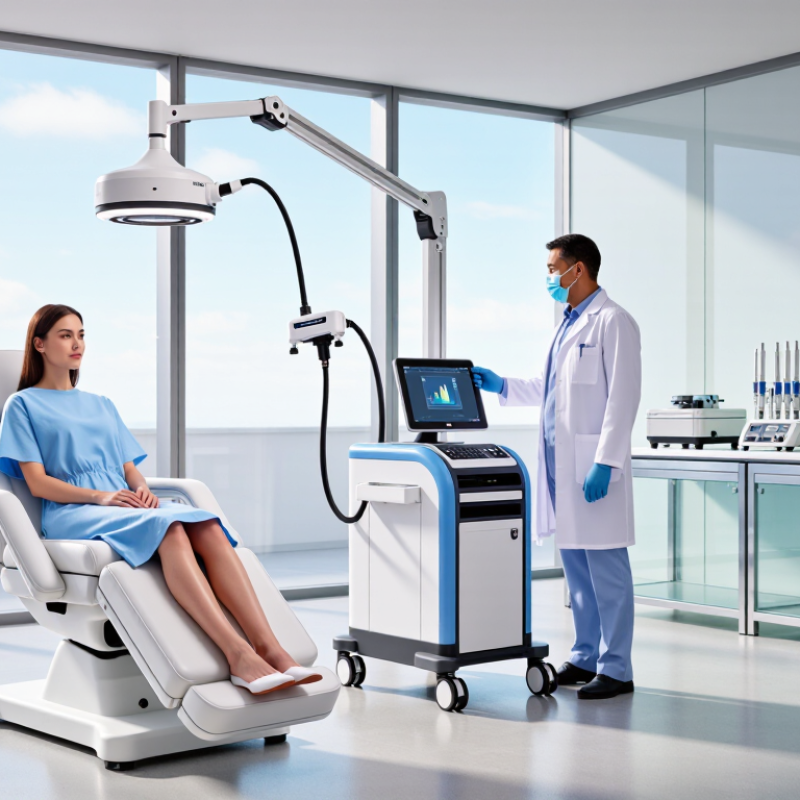
Medical aesthetic lasers are moving beyond simple resurfacing. They now combine selective wavelengths, fractional delivery, cooling systems, and increasingly precise treatment planning. A patient may receive a few controlled pulses for pigmentation, acne scars, vascular concerns, or unwanted hair. The goal is not merely dramatic change. It is safer, more natural-looking improvement with less downtime.

So, what is the future of medical aesthetic laser treatments? Dr. R. Rox Anderson, a leading Harvard dermatologist and laser researcher, has said, “The future of dermatology is in the physics of light.” His observation remains highly relevant. Future devices may identify skin characteristics more accurately, adjust energy levels in real time, and support personalized treatment plans. Artificial intelligence may assist with imaging, but experienced clinicians must still interpret the patient’s history, skin type, medications, and healing response.

This Top 10 Medical Aesthetic Laser Trends for the Future outline examines that changing landscape. It explores picosecond platforms, fractional precision, intelligent diagnostics, combination protocols, and improved cooling technology. It also considers practical concerns, including uneven results, unrealistic expectations, and the risk of treating technology as a substitute for clinical judgment.

Some predictions may prove wrong.

That is worth admitting.

Evidence remains uneven across emerging devices. Long-term studies do not always match manufacturers’ excitement. Responsible progress therefore requires trained medical supervision, transparent consultation, documented outcomes, and careful patient selection. The future may look remarkably advanced, yet trust will still depend on basic details: calibrated equipment, clean technique, honest communication, and follow-up after the treatment room.
Top 10 Medical Aesthetic Laser Trends for the Future?

Evolution of Medical Aesthetic Laser Technologies and Clinical Applications

Medical aesthetic lasers are moving from broad treatment categories toward precise, indication-led platforms. Earlier ablative systems removed large areas of tissue, often requiring longer recovery. Fractional delivery now creates microscopic treatment columns, leaving surrounding skin intact. This approach supports acne-scar revision, photodamage management, and texture improvement with more predictable healing.

The evolution is also visible in pulse control, cooling, and real-time imaging. Picosecond devices target pigment with shorter energy bursts, while long-pulsed systems remain useful for vascular lesions and hair reduction.

According to the ISAPS Global Survey 2023, non-surgical aesthetic procedures exceeded 19 million worldwide, showing strong demand for lower-downtime care.

Grand View Research estimates the medical aesthetic laser market could expand at approximately 11% annually through 2030.

These figures suggest momentum, but they do not prove that every new device improves outcomes.

Clinical practice must remain more careful than marketing language. Skin type, medication history, scar risk, and treatment depth can change the result. Experienced clinicians should document baseline photographs, test conservative settings, and monitor pigmentary changes during follow-up. In real clinics, protocols are rarely perfect. Some patients need staged treatment, and some respond poorly despite technically correct procedures.

Future progress should therefore combine machine intelligence with peer-reviewed evidence, transparent adverse-event reporting, and operator training.

Faster treatment is useful. Safer judgment matters more.

AI-Assisted Diagnosis and Personalized Laser Treatment Planning

AI-Assisted Diagnosis and Personalized Laser Treatment Planning

Artificial intelligence is changing how medical aesthetic clinics assess skin concerns before laser treatment. High-resolution images can help identify pigmentation, redness, uneven texture, and possible contraindications. Yet image analysis is not a diagnosis by itself. A qualified clinician must review the patient’s history, medications, skin type, healing patterns, and treatment goals. The safest systems combine AI suggestions with professional judgment and documented consent.

Personalized planning may adjust wavelength, energy, pulse duration, coverage, and treatment intervals. It can also compare progress through standardized photographs taken under consistent lighting. This creates a clearer record than memory alone. However, AI may perform poorly with limited or unbalanced training data. Darker skin tones, unusual conditions, or poor image quality can reduce accuracy. That limitation deserves more attention. Technology should assist decisions, not quietly replace them.

Tips: Use clean, evenly lit images and avoid filters. Ask how the system protects personal data. Confirm who reviews the AI report. Request a conservative test area when appropriate. Discuss expected downtime, warning signs, and alternative treatments. Keep follow-up appointments, even when early results look promising. Small adjustments matter. Reliable care requires regular audits, transparent records, and clinicians willing to question automated recommendations.

Multi-Wavelength Systems for Comprehensive Aesthetic Procedures

Top 10 Medical Aesthetic Laser Trends for the Future?

Multi-wavelength systems are changing how clinics plan aesthetic procedures. One platform can address several tissue targets with carefully selected wavelengths. Shorter wavelengths may support superficial pigment concerns, while longer wavelengths can reach deeper structures. Vascular treatments often require different absorption behavior than hair reduction. Resurfacing also demands controlled energy and precise thermal delivery. The technology sounds simple. It is not.

In daily practice, clinicians should match wavelength, pulse duration, fluence, and cooling to the patient’s skin type. A darker skin tone may require conservative settings and longer observation. A small facial vessel, a coarse hair follicle, and uneven pigmentation do not respond identically.

Experienced providers examine medical history, recent tanning, medications, and previous procedures before treatment. They also document test spots, endpoint changes, and recovery over time. Protective eyewear remains essential.

Multi-wavelength systems may reduce equipment changes and improve workflow. Patients can receive more coordinated care during one treatment plan. However, broader capability can encourage over-treatment. That risk deserves attention. I have seen how convenient settings can create false confidence, especially when operators rely on presets without assessment. Training, calibrated devices, informed consent, and realistic expectations matter more than having many wavelengths available. Results can vary, and some skin reactions appear days later. Careful follow-up remains part of the procedure, not an optional extra.

Noninvasive Skin Remodeling with Fractional and Picosecond Lasers

Top 10 Medical Aesthetic Laser Trends for the Future?
Noninvasive Skin Remodeling with Fractional and Picosecond Lasers

Fractional lasers are moving toward controlled remodeling, not aggressive resurfacing. They create microscopic treatment zones while preserving surrounding skin. This can support collagen renewal, soften fine lines, and improve uneven texture. In clinical practice, redness often lasts several days, depending on energy settings and skin sensitivity. Recovery is usually shorter than full-field resurfacing, but “minimal downtime” is not universal. That phrase needs more honesty.

Picosecond lasers add another direction. Their ultra-short pulses can target pigment and stimulate dermal responses with limited thermal exposure. They may help selected patients with sun spots, acne-related discoloration, or dull tone. Results depend on wavelength, pulse delivery, skin type, and realistic treatment intervals. Darker skin requires careful assessment because post-inflammatory hyperpigmentation remains possible. A patch test may be sensible. It is not a guarantee.

Market demand is supporting this shift. Fortune Business Insights valued the global medical aesthetics market at about $19.4 billion in 2023. The report projects strong growth through 2030, driven partly by noninvasive procedures. The American Society for Dermatologic Surgery’s 2023 survey also found sustained consumer interest in improving skin texture and appearance without surgery. Still, market growth does not prove clinical superiority. The evidence remains uneven across devices and indications. Better studies should compare long-term outcomes, not only photographs taken weeks later.

Safety, Sustainability, and Future Standards in Laser Aesthetics

Top 10 Medical Aesthetic Laser Trends for the Future?

Safety, sustainability, and shared standards will shape the next decade of laser aesthetics. The ten strongest trends include real-time cooling, AI-assisted imaging, adaptive pulse control, safer skin-type settings, contactless measurement, combination protocols, repairable equipment, lower-energy modes, transparent outcome tracking, and stronger clinician training. ISAPS reported 19.1 million non-surgical aesthetic procedures worldwide in 2023, a 3.0% rise from 2022. Growth increases responsibility. Every treatment should include documented fluence, pulse duration, cooling, eye protection, and informed consent. Skin tone assessment must guide settings, not guesswork.

Sustainability needs equal attention. Health Care Without Harm and Arup estimated healthcare creates 4.4% of global greenhouse gas emissions. Laser clinics can reduce waste through reusable accessories, efficient cooling systems, preventive maintenance, and responsible end-of-life recycling. Future standards should measure energy use per treatment and require clearer equipment safety records. IEC 60601-2-22 provides a useful foundation for medical laser safety, but technical compliance alone cannot replace clinical judgment. Some protocols still prioritize speed over recovery. That deserves honest review.

Tips: Ask for a treatment plan with exact settings, expected downtime, and possible pigment changes. Request before-and-after evidence on similar skin types. Confirm staff training and emergency procedures. Record every session. Small details matter. Reliability is built over time.

FAQS

What are medical aesthetic lasers used for?

They may address acne scars, uneven texture, pigmentation, vascular lesions, hair reduction, and photodamage. Different targets need different energy patterns. Results are not guaranteed.

How does fractional delivery differ from broad ablative treatment?

Fractional systems create microscopic treatment columns. Untreated skin remains between them. This can support more predictable healing, but recovery still varies.

Why are multiple wavelengths useful?

Different wavelengths reach different tissue depths and absorption targets. One system may support coordinated treatment planning. Convenience can mislead. More options do not automatically mean better outcomes.

What should clinicians assess before treatment?

They should review skin type, recent tanning, medications, scar history, and previous procedures. Treatment depth and pulse settings also matter. A small facial vessel is not a coarse hair follicle.

Are darker skin tones suitable for laser treatment?

They may be treated with conservative settings and longer observation. Pigmentary changes can appear days later. Individual assessment is essential.

What safety steps are recommended during treatment?

Providers should take baseline photographs, perform test spots, use protective eyewear, and document recovery. Follow-up is part of treatment. Not optional.

Can newer devices guarantee faster or better results?

No. Shorter pulses, cooling, imaging, and automated features may improve control. Evidence remains uneven. An advanced device can still produce a poor result.

Why might a patient need staged treatment?

Some patients respond slowly or develop delayed reactions. Staged sessions allow healing and adjustment. Even technically correct procedures sometimes disappoint. That deserves honest discussion.

What role does operator training play?

Clinicians must match wavelength, pulse duration, fluence, and cooling to each patient. Presets cannot replace judgment. This is where practice can fall short.

Conclusion

Medical aesthetic laser technology is evolving from single-purpose devices into intelligent, versatile platforms that support safer and more personalized care. The future will be shaped by AI-assisted diagnosis, which can help clinicians evaluate skin conditions, identify treatment goals, and develop individualized laser plans based on skin type, sensitivity, and desired outcomes. Multi-wavelength systems may also enable practitioners to address pigmentation, vascular concerns, texture irregularities, and hair growth within more comprehensive treatment strategies.

Noninvasive skin remodeling will continue to advance through fractional and picosecond laser approaches designed to stimulate collagen, refine texture, and reduce recovery time. As patients and providers place greater emphasis on safety and sustainability, future systems are likely to prioritize precise energy delivery, improved cooling, efficient resource use, and clearer clinical standards. Ultimately, what is the future of medical aesthetic laser treatments? It is a more connected, customized, and responsible field that combines clinical expertise with intelligent technology while maintaining realistic expectations and patient-centered care.

Madeline

Madeline

Madeline is a dedicated marketing professional with a wealth of expertise in our company's core offerings. With a keen understanding of the industry, she brings a unique perspective to her role, consistently delivering high-quality content that highlights the superior aspects of our products. As......